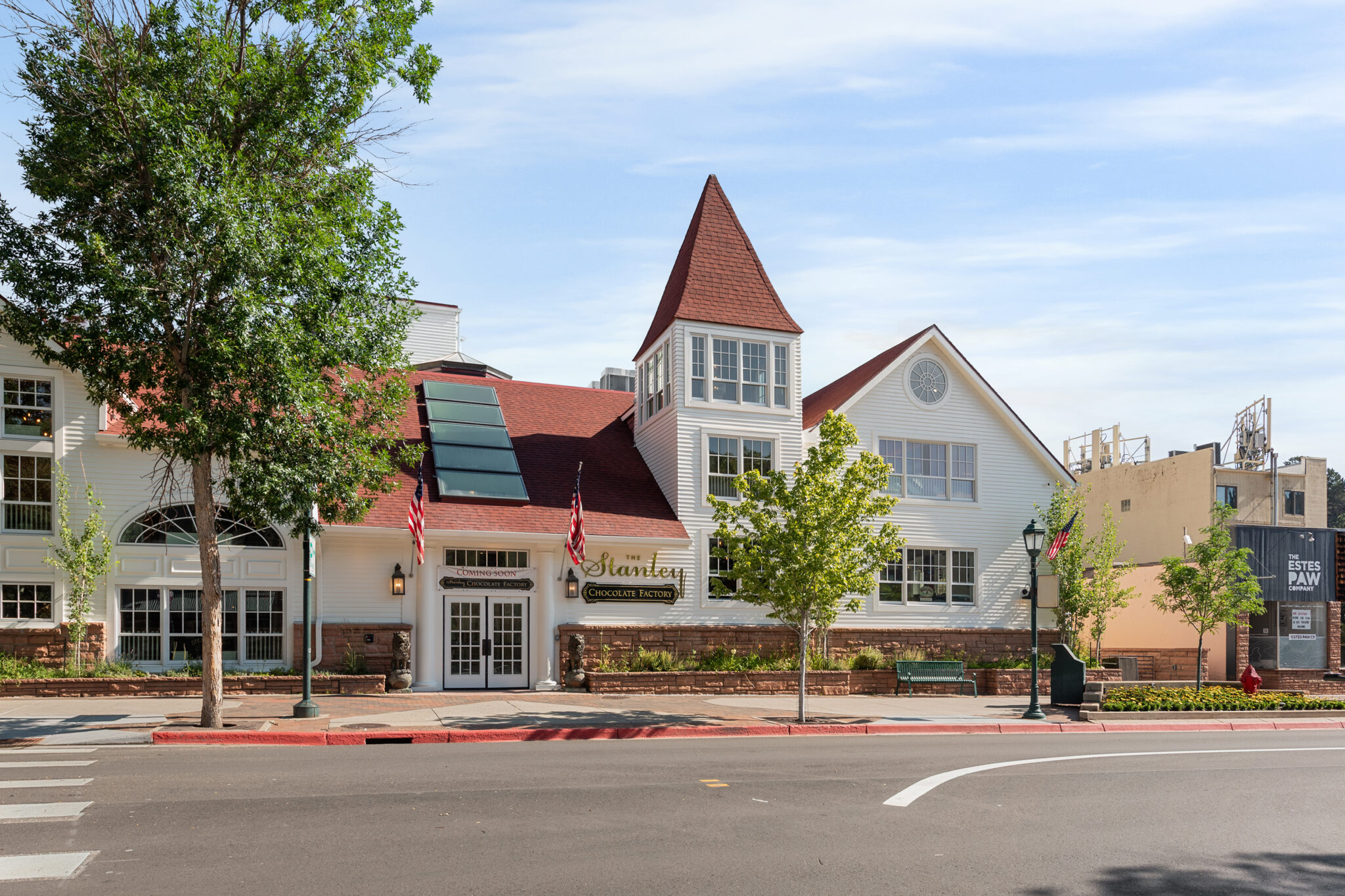
The Stanley Chocolate Factory
Transforming a historic landmark into a one-of-a-kind destination for craftsmanship, hospitality, and community....
Read More →


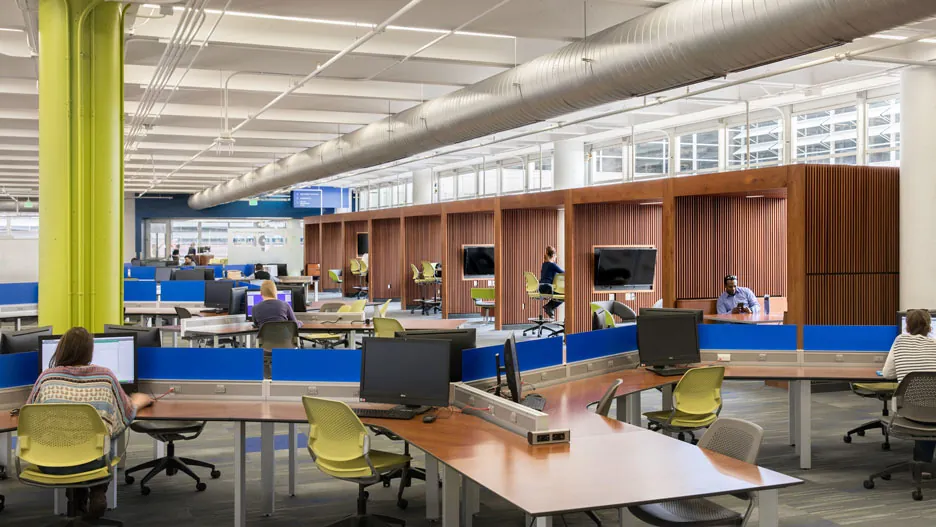
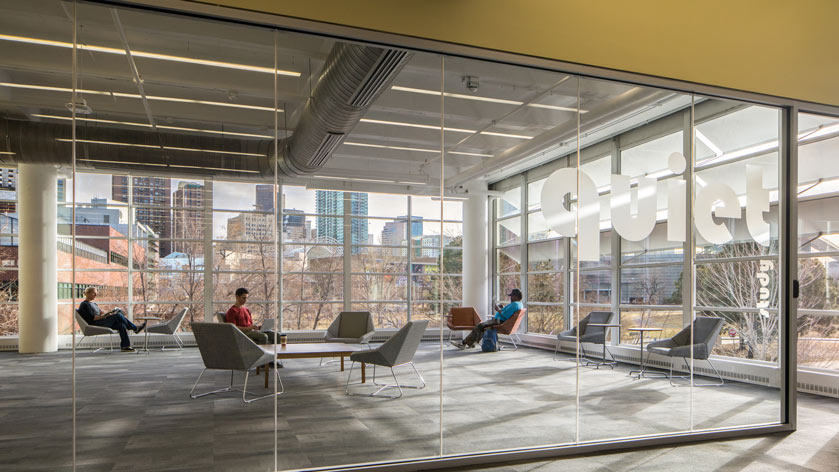
As the nation’s only tri-institutional academic library, the Auraria Library serves more than 51,000 students from the University of Colorado Denver, Metropolitan State University of Denver, and Community College of Denver. Located at the heart of the Auraria Higher Education Campus, this 180,000-square-foot facility underwent a comprehensive modernization that transformed a 40-year-old building into a flexible, technology-rich learning environment while remaining fully operational throughout construction.
With 5,000 to 6,000 visitors using the library daily, maintaining uninterrupted access was a critical project requirement. The facility continued operating seven days a week, from 7 a.m. to 10 p.m., throughout construction and never closed its doors. To successfully execute the work within an active academic environment, the project was strategically divided into 20 carefully planned subphases that minimized disruptions to students, faculty, and staff.
The renovation included extensive infrastructure and building system upgrades designed to improve performance, sustainability, and long-term functionality. Major improvements included a complete roof replacement, demolition and reconstruction of all six mechanical rooms, installation of new HVAC systems, conversion from steam service to natural gas, addition of a building-wide fire suppression system, replacement of all lighting with energy-efficient fixtures and controls, electrical service upgrades, and replacement of the building’s exterior glazing while restoring the existing curtain wall system.
The project also redefined how the library supports modern learning. New spaces include collaborative classrooms, a creative technology lab, a café with healthy dining options, a digital Discovery Wall, group and private study rooms, and a dedicated Special Collections room. The library expanded its digital resources while reducing its physical book footprint, introducing tools such as 3D printers, advanced computing resources, and a photography studio to support research, innovation, and creativity.
Outdoor spaces were transformed through the renovation of two courtyards featuring Wi-Fi connectivity and rain gardens designed to collect and reuse stormwater. These enhancements create additional places for study, collaboration, and informal gathering while supporting the project’s sustainability goals.
One of the facility’s most recognizable features is the dramatic canary-yellow entrance canopy that now defines the building’s identity. Constructed from 100 aluminum panels containing approximately 2,000 water-jet-cut openings, the canopy required a year of planning, engineering, and logistical coordination. The structure was assembled at ground level and carefully lifted into place just inches from the building’s glass façade, creating a striking architectural focal point that signals the library’s transformation.
This project received multiple industry awards, including:
Auraria Higher Education Center
StudioTrope

Developing the Right Strategy

Planning for Success

Well-Oiled Construction Process

Ensuring Sustained Operations
 Estes Park, Colorado
 Boulder, Colorado
 Cheyenne, Wyoming